
“Finding a support group was the real game changer. It helped me begin to accept that I might actually have this thing called BDD. The way we would all describe certain experiences almost verbatim made it hard to deny that a common thread linked us together.”
At its worst, BDD made me feel like an amorphous alien blob of flesh and body parts whose loosely formed features wouldn’t stay in their own distinct shape when I didn’t pay attention. I believed that I spread to fit my clothing no matter the shape or size, like jelly in mould, so that garments would fit tight to my formless body, or worse, create a bulge. The areas of concern were broad ranging. Depending on the day it might be my hair, my body shape and size, or my face. I remember likening myself to a Picasso, feeling that my facial features were ‘all over the place’, and that ‘I look like I’ve been hit by a bus’. That one was a particularly nasty judgement that really took me into despair. The only parts of my body that I liked were my feet, hands, forearms and ears.
I was hyper aware of how I looked from different angles, making public and group situations extremely difficult, I couldn’t effectively control my body for all the angles needed at any given time. I’d be facing someone trying to focus on how I look to them, and on the conversation, whilst frantically worrying about how I look to someone else passing by! Just walking to and from work became a huge ordeal, with every person that walked towards me sending a spasm of shame through my body for fear of what they could see when they looked at me. Holding back tears, thoughts spiralling way out of control, and hyperventilating until I reached somewhere ‘safe’ was a daily experience.
The feeling of people looking at me ‘noticing how ugly I was’, brought about a set of physical symptoms. I became instantly hot and flushed, breathless, and panicked. Often parts of my body would begin to really hurt, like a hot and painful lower back, or sore legs or arms. I don’t know how but the thoughts, and perhaps the associated tension, quickly brought on this physical pain. I would often become bloated if the area of concern in that moment was my tummy. If my top wasn’t baggy enough I would be concerned that my tummy contours could be seen against the clothing, and this mental anxiety would trigger painful physical bloating that made me completely unable to focus on anything else.
I first sought professional help when I was at university age 21 and received some low cost counselling for what I thought was general depression. But I didn’t have the words to describe what I was experiencing and I didn’t know that BDD was even a thing. So the cycle of insufficient short term attempts at counselling continued for a number of years with a variety of practitioners. I was around 27 years old before a psychologist raised the possibility of me experiencing BDD and started treating me with CBT for BDD. At first I didn’t fully believe I had BDD, but I was happy for my emotional pain to be taken seriously and to receive specialist support. The belief I held was ‘I’m just ugly, and this psychologist, seeing this to be true and unable to resolve my appearance, is just trying to make me happy by telling me it’s a mental problem instead’ I was afraid that if the work was successful I’d end up living my life like someone whose appearance wasn’t deficient, and make a huge fool of myself by not being aware of my true ugliness.
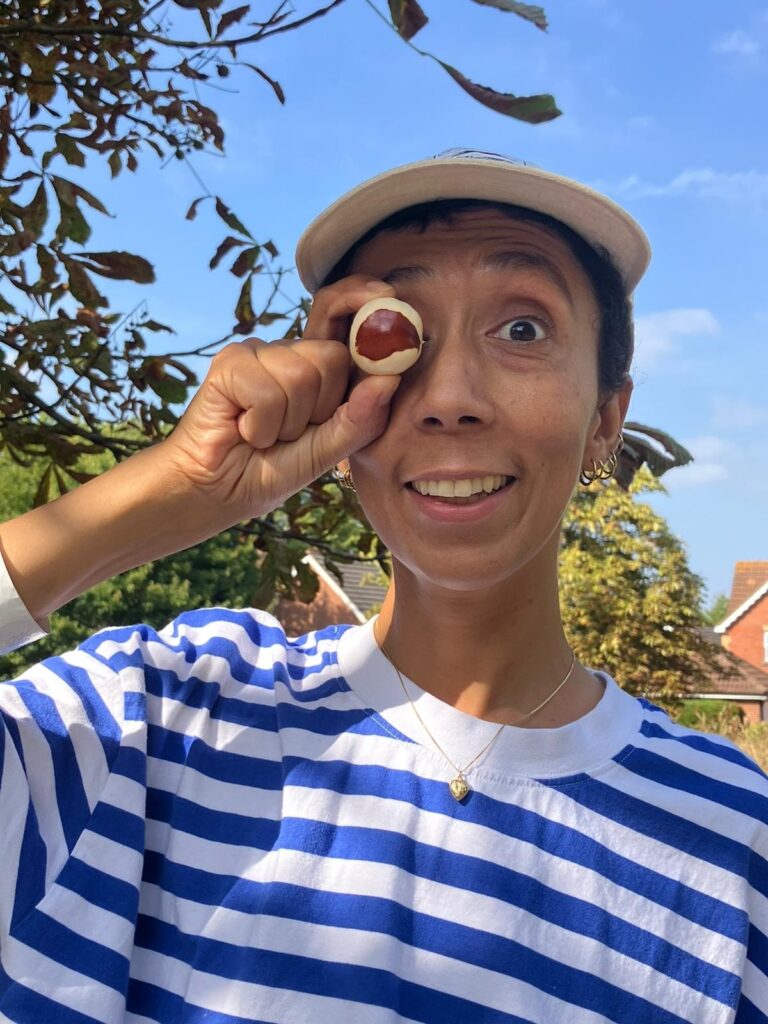
Finding a support group was the real game changer. I still needed to work one to one in therapy but meeting others experiencing the exact same concerns and behaviours was eye opening. It helped me begin to accept that I might actually have this thing called BDD. The way we would all describe certain experiences almost verbatim made it hard to deny that a common thread linked us together.
I cope with challenges now by separating myself from the BDD, seeing it as something ‘other’ that tricks me into feeling and believing certain things that aren’t helpful. Maybe BDD is a bit like the opposite of ‘rose tinted glasses’. If I hear myself making unfair judgments in the mirror, I take off my BDD tinted glasses, and try really hard to adjust my vision back to reality. Blink a few times, step back and get some distance, look in a different mirror with natural lighting, or just simply walk away and do something else. I stop engaging with the thoughts because I know that ruminating and looking closer will not help at all.
I feel most proud of a recent experience I had, that I didn’t even notice until after the event, and that in itself is the beauty of it. I was going out to a gallery for an evening event, mingling and art etc.. the sort of thing that can terrify me. I had to wear what I had on from the day, which was not a good outfit, and I had to do my makeup in super low lighting. I expected to feel wretched when I got there, I promised myself I’d show my face and then head off as soon as I felt too uncomfortable. Skip forward 2 or 3 days, sitting in my car, and the realisation hit me hard!… a smile crept onto my face as I realised that I don’t even remember thinking about my appearance the whole evening at the gallery. When I arrived I asked my friend if I had panda eyes from doing my makeup in low light, she responded that I did a little bit but not that bad. And somehow that was enough for me. I stayed a couple of hours, I chatted and laughed and met new people. I didn’t hold my body at weird angles, or think about how I looked from behind. It was an incredible moment of realisation that filled my body with happiness and hope. If I can do that once, surely I can do it again!
I still have difficulties with BDD at times, but on the whole I am able to move through life without the constant knot of unworthiness in my chest. I am beginning to experience myself as more than my appearance. When I think I look crap it doesn’t have to stop me from enjoying the day or leaving the house, because I now know for certain that the image I conjure up with my BDD eyes is way worse than reality. I trust that even at my worst, I still just look like a human, a perfectly imperfect human just like all the others. So I don’t have to get hot and sweaty walking down the highstreet, because as it turns out I don’t actually look like an amorphous alien blob.