
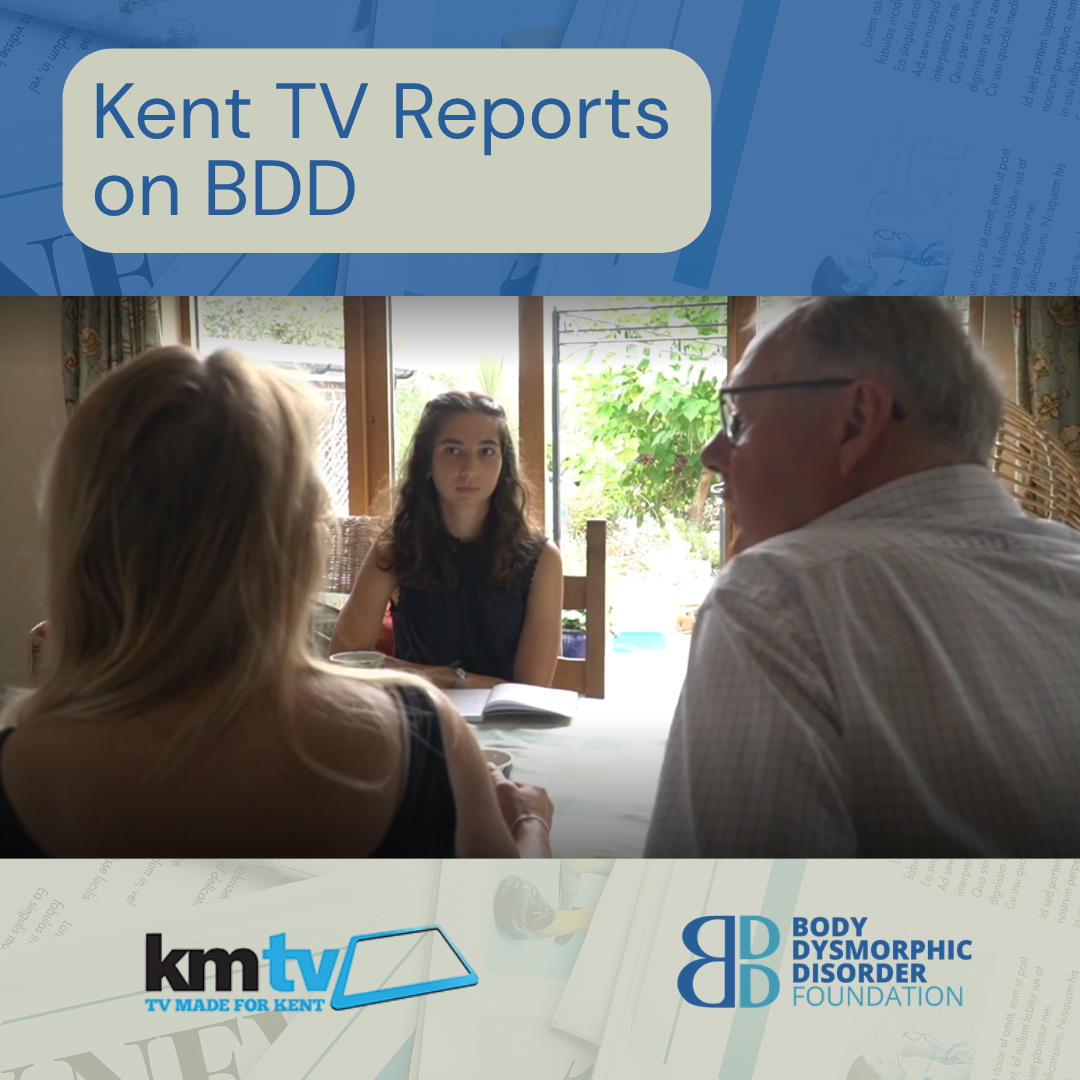
We’re incredibly grateful to Kent TV for shining a light on BDD and for giving a family affected by the condition the opportunity to share their experience.
Our Trustee Mike and his family bravely spoke about their daughter’s experience of BDD, sharing an insight into the devastating impact the condition can have – not only on the person experiencing it, but on the whole family. Their willingness to speak openly about what they have been through is incredibly important. BDD is often misunderstood, and many people may not realise just how serious and debilitating it can be.
Mike shared that: “You see someone looking in the mirror all the time, you might think that they think a lot of themselves, but the problem is actually very low self-esteem.”
This captures one of the many misconceptions surrounding BDD. Someone with BDD may spend a great deal of time looking at, checking or trying to hide a perceived flaw in their appearance. From the outside, this behaviour can easily be misunderstood as vanity or an excessive concern with appearance. In reality, BDD is associated with intense distress, shame, anxiety and very low self-esteem.
For some people, the condition can become so overwhelming that everyday life is severely restricted. Work, education, relationships, socialising and leaving the house can all become extremely difficult. Families can also find themselves struggling to understand what is happening and how best to support someone they love.
BDD can be life-threatening
One of the most important messages highlighted through this coverage is the serious risk associated with BDD.
BDD has a disturbingly high rate of suicidal thoughts and suicide attempts compared with many other mental health conditions. This is why recognising the condition and ensuring people can access appropriate support and treatment is so important.
BDD is not simply a passing insecurity, and it is not something that someone can overcome by being reassured about their appearance.
There is treatment and there is hope
While BDD can have a devastating impact, there is also an important message of hope.
Evidence-based treatments are available, and people with BDD can and do recover. With the right support and treatment, it is possible to reduce the distress and compulsive behaviours associated with the condition and to begin rebuilding a life that has become restricted by BDD.
Raising awareness is a vital part of that process. The more people understand about BDD, the more likely it is that someone experiencing it, or a family member who is watching them struggle, will recognise what may be happening and seek help.
We would like to extend our heartfelt thanks to Mike and his family for their courage in sharing their story, and to Kent TV for helping to bring greater awareness to BDD, its devastating impact and the hope that treatment can bring.
See the full article and TV clip here