News

Liz Atkin – Compulsive skin picking & art

Compulsive Skin Picking dominated her life for more than 20 years, but through a background in dance and theatre, she confronted the condition to harness creative repair and recovery.

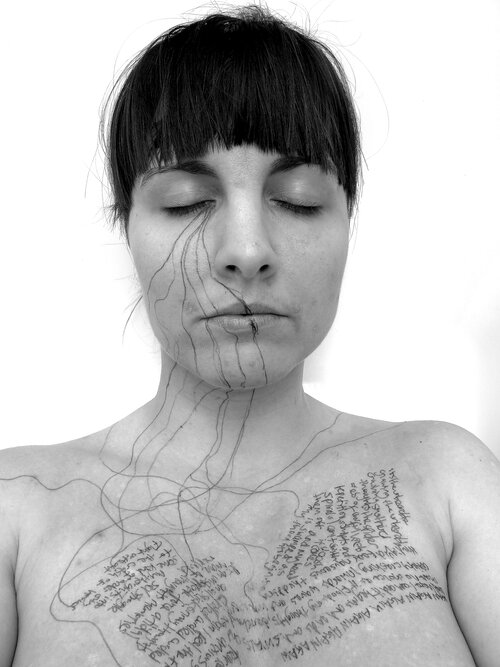
Liz Atkin is a visual artist based in London. Physicality underpins a creative practice with her skin as a primary source for corporeal artwork and imaginative transformation. Compulsive Skin Picking dominated her life for more than 20 years, but through a background in dance and theatre, she confronted the condition to harness creative repair and recovery. She creates intimate artworks, photographs and performances exploring the body-focused repetitive behaviour of skin picking. Liz has exhibited and performed her work in therapeutic settings, galleries and venues in the UK, Australia, USA and Japan.

Liz is an advocate for mental health and Compulsive Skin Picking (dermatillomania) in the UK and around the world. Liz speaks publicly about her experience to raise awareness and reduce the stigma and shame surrounding this condition. She has spoken at conferences and featured on Tedx, BBC News, Huffington Post and Woman’s Hour, amongst others. 

My experience of skin picking started from a young age. The illness wasn’t actually diagnosed until my early 30s, by that point I’d been picking for the best part of 25 years and it was only through internet searches that I realised it had a name. I found the behaviour soothing – it would block out tension, anxiety and uncomfortable emotions as through picking, and I’d hit a ‘zoned-out’ sense of calm. It developed into something I did subconsciously so there were hours where I would be picking my skin without really thinking about it. The disorder became a private vicious cycle that totally dominated my life behind closed doors. My body was littered with wounds and marks beneath my clothes. No one knew about it. I took care to mask and hide the illness and behaviour from those closest to me, wearing clothes that concealed the parts of my body covered in scabs and scars, making excuses and using make-up on my body to mask it.

I began to document how, when and where the illness took place and I began to recognise patterns. When I felt the urge to pick I tried to turn it into something else, something creative. Drawing, especially with charcoal, has become one of my greatest tools for recovery

Before the Covid-19 pandemic, she gave away more than 18,000 free #CompulsiveCharcoal newspaper drawings to commuters on public transport in London, New York, San Francisco, Singapore, Cologne and more. 

To see more of her artwork and learn more about her advocacy and media work follow this link to her website

More stories from the community
My broken reality with BDD – Leigh de Vries

Compulsive Skin Picking dominated her life for more than 20 years, but through a background in dance and theatre, she confronted the condition to harness creative repair and recovery.

Are you worried about how you look? How much time per day do you spend thinking about how you look? What part of your body do you want to change? Do you think you are not thin enough? Has the way you look affected your life? My name is Leigh de Vries and I have a condition called Body Dysmorphic Disorder (BDD).

BDD is a disabling preoccupation with perceived defects or flaws in ones appearance.

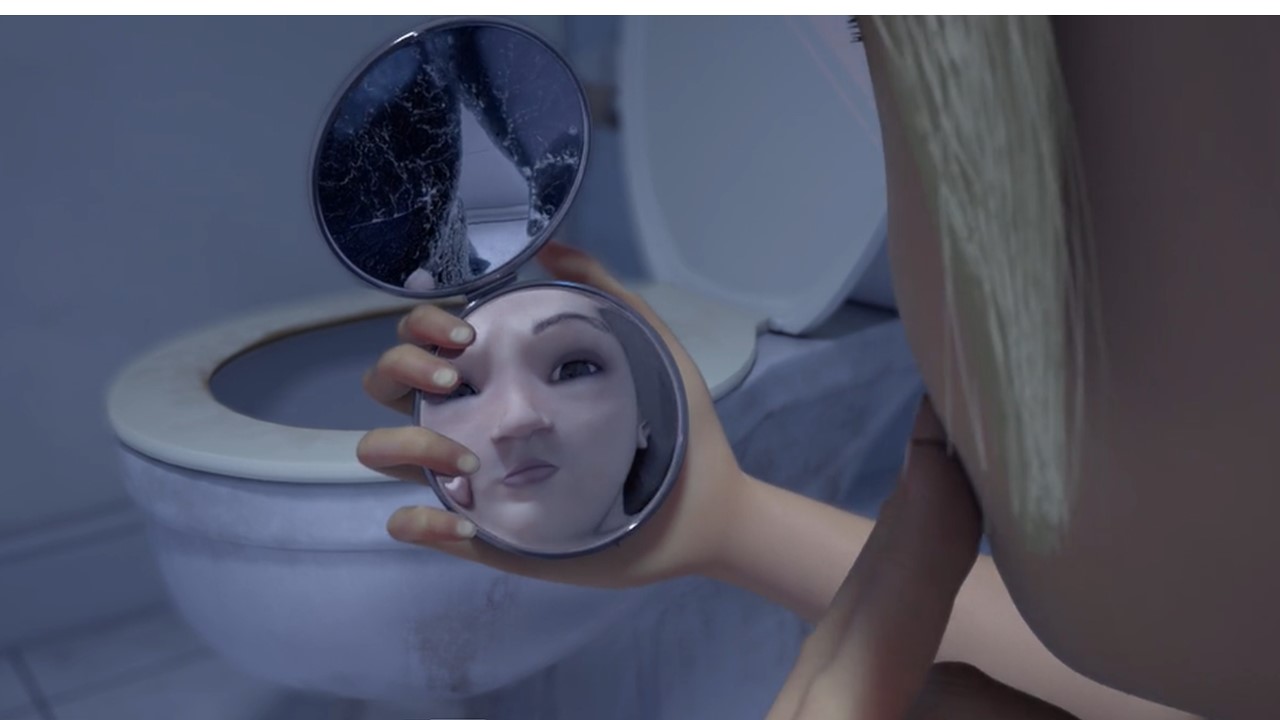
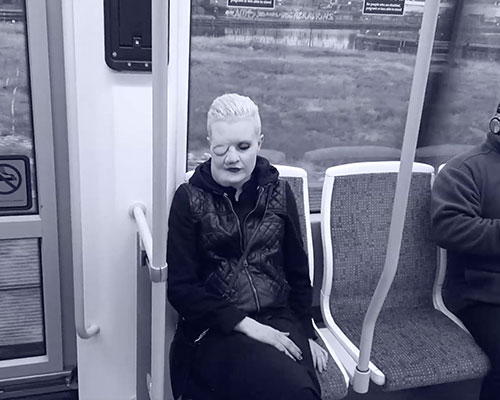
As a life time sufferer of BDD I have always believed myself to be severely deformed. In Dec 2014 I collaborated with make-up artist Shaune Harrison who created a prosthetic tumour that covered one side of my face, giving birth to the monster I perceived myself to be. 

Accompanied by cameramen with hidden cameras, we spent a day filming, travelling on public transport and walking the streets, documenting my feelings of isolation and people’s reaction to my grotesque appearance.

Based on my personal experience of BDD I want to educate people about the condition, as well as reach a wider audience of professionals.
 
In addition to raising awareness I hope that my own exposure might help other sufferers to recognise and get help for this little-known and often misunderstood condition.
 
On a personal level, the project to date has been extremely helpful in my own recovery.  It gave me something to focus on. Knowing that I had the potential to help other people in the process has brought me allot of joy. 

http://mybrokenreality.com/

More stories from the community
Beating BDD Podcast #19 Nicole Schnackenberg

“BDD isn’t who you are, and it doesn’t last forever.”

Nicole has many strings to her bow, including being a writer, a psychotherapist and a trustee of the BDD Foundation. Her doctoral research was focussed on BDD in educational settings. With her lived experience of both BDD and anorexia, she brings some really fresh and interesting perspectives to the podcast.


You can download the transcript for this episode here:

Beating BDD Podcast #18 Prof David Veale

“BDD isn’t who you are, and it doesn’t last forever.”

We had a real treat in this episode: an interview with Professor David Veale. David is a leading specialist in BDD, based at the South London and Maudsley NHS Foundation Trust and at the Priory Hospital North London. He joined us to talk about how he came to specialise in BDD, and to answer questions sent in by people with the condition.


You can download the transcript for this episode here:

Beating BDD Podcast #17 Kitty Wallace

“BDD isn’t who you are, and it doesn’t last forever.”

As head of operations for the BDD Foundation in the UK, Kitty Wallace supports sufferers and their families, raises awareness of the condition and much more. But she’s also had her own experience of living with BDD – including a big relapse after catching glandular fever. Her story shows that recovery may not always be a straight line, but it’s always possible.


You can download the transcript for this episode here:

Beating BDD Podcast #16 Rebecca Foster

You can get better – you just have to be brave.”

Rebecca suffered from BDD for many years, alongside issues with alcohol and food. It was only when she realised the BDD was driving the other issues that she was able to make real and inspiring progress.


You can download the transcript for this episode here:

Beating BDD Podcast #15 Scarlett and Frances

You can get better – you just have to be brave.”

This is episode 15, the second part of a conversation between two mums whose daughters are in recovery from BDD. In it, Scarlett and Frances discuss how schools can help or hinder, how to support someone through treatment and the importance of setting small goals


You can download the transcript for this episode here:

Beating BDD Podcast #14 Scarlett and Frances

You can get better – you just have to be brave.”

For this and episode 15, I’ve handed the mike over to two mums who’ve lived through their daughters’ severe BDD and come out the other side. In part one, Scarlett and Frances talk about how their daughters are doing now and how they coped with the worst times.


You can download the transcript for this episode here:

Beating BDD Podcast #13 Tim Branford-White

You can get better – you just have to be brave.”

Tim spent many years feeling full of shame and hopelessness because of his BDD. But after just 20 sessions of specialist CBT, he says he’s recovered. In this episode, he shares what he’s learnt about getting and staying well.


You can download the transcript for this episode here:

Beating BDD Podcast #12 Debbie and Daniel

You can get better – you just have to be brave.”

Episodes 10 and 11 featured an interview with Oliver Butcher, who spoke publicly for the first time about his struggle with BDD. In this episode, you’ll hear how his experience affected the lives of his mum Debbie and his older brother Daniel.


You can download the transcript for this episode here:

The Body Dysmorphic Disorder Foundation. Charity no. 1153753.